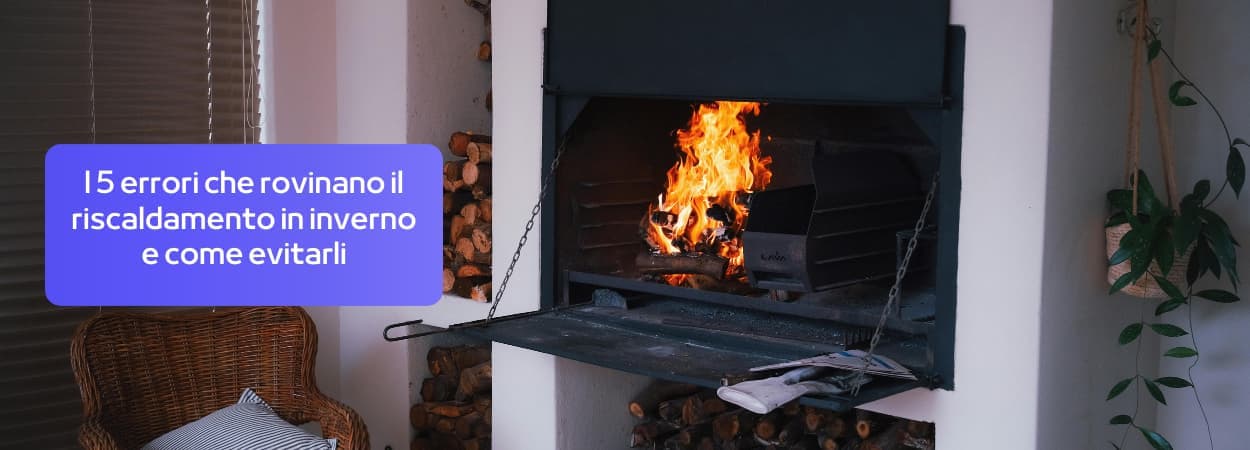
I 5 errori che rovinano il riscaldamento in inverno e come evitarli

Heating costs don't depend solely on energy prices or the type of system installed. In many homes, rising costs are caused by daily habits that go unnoticed , yet reduce efficiency without improving comfort. During the winter, poor heating management can translate into hundreds of euros more at the end of the season, especially when kWh costs remain high. Identifying the practices with the greatest impact allows you to save without complex interventions and without sacrificing comfort.
Relative impact of the most common warm-up mistakes
| Unfair practice error | Impact on consumption |
| Ignore humidity and dry clothes indoors | High |
| Close rooms to save money | Medium-High |
| Continuously turning the heating on and off | High |
| Increasing the temperature instead of improving the insulation | Very high |
| Place furniture in front of radiators | Medium |
1. Ignore humidity and dry clothes indoors
Humidity is one of the most underestimated factors of thermal comfort , the most hindering the creation of a thermally comfortable environment. A humid environment feels colder , even when the temperature is just right. Drying clothes indoors increases humidity and reduces the effectiveness of heating, directly impacting household energy consumption . The result is a constant feeling of cold, which leads to raising the temperature without addressing the real problem .2. Close rooms to save on heating
Closing off unused rooms seems like a logical choice, but it often produces the opposite effect. Heat is distributed worse , and the system loses thermal balance. Cold areas absorb heat from heated rooms, forcing the system to work longer. This imbalance is reflected in the electricity bill , even if you feel like you're consuming less.3. Continuously turning the heating on and off
Using your heating like a switch, turning it on only when you feel cold, leads to peak consumption and increased wear and tear on the system . Each restart requires more energy than maintaining a stable temperature. While this habit gives a sense of control, it often translates into higher costs and less comfort , directly impacting electricity costs throughout the winter.4. Increasing the temperature instead of improving the insulation
When faced with a cold home, the immediate reaction is to turn up the thermostat. However, old windows, uninsulated shutter boxes, or doors that let in drafts allow heat to continually escape. Under these conditions, raising the temperature doesn't improve comfort, but rather increases consumption. The problem isn't the power of the system, but rather the home's ability to retain heat , a key element of energy efficiency .5. Place furniture in front of radiators
Sofas, curtains, or furniture in front of radiators prevent proper heat distribution. Even when the system is turned on, the heat remains trapped and doesn't reach the room . This is a common mistake in smaller homes and is also one of the easiest to correct. Clearing the radiators improves efficiency without modifying the system or increasing consumption .Less temperature, more heat control
Most mistakes that increase heating costs aren't solved by turning up the temperature, but by understanding how heat behaves inside the home . Humidity, insulation, and space utilization are just as important as the system itself. Addressing these factors allows you to improve comfort and reduce consumption without increasing costs.Loading comments...
Hello world!
26 luglio 2021gauthier
Sample Page
26 luglio 2021gauthier
Newsletter
28 luglio 2021bruno

Gas, rincari d’inizio 2025: bollette in aumento del 28% per le famiglie italiane
Bollette del gas in aumento del 28% nel 2025: analisi dei rincari, mercato PSV e consigli per famiglie italiane.
20 ottobre 2025gbottan

Capodanno: 10 consigli per risparmiare sulla bolletta
A Capodanno il riscaldamento può far crescere i consumi, ma con alcune accortezze si può contenere la spesa in bolletta. Regolare la temperatura, usare termostati programmabili ed evitare continui on/off aiuta a ridurre gli sprechi.
19 dicembre 2025gbottan
I 7 elettrodomestici che consumano più elettricità durante le festività
Nei periodi di festa i consumi domestici aumentano: riscaldamento elettrico e climatizzatori incidono di più, seguiti dagli elettrodomestici da cucina usati intensamente e dai dispositivi di intrattenimento spesso accesi o in standby. L’articolo riassume dove si concentrano i picchi e quali accorgimenti aiutano a contenerli.
22 dicembre 2025gdelutiis